Introduction
Mark Robertson is a 49 year old veteran of the United States Navy who has been farming in Albuquerque’s North Valley for the past 10 years. Alongside his wife, Sarah, Mark runs two small farming spaces where they grow produce for CSA members, farmers markets, and local restaurants such as Campo at Los Poblanos and Farm & Table. Even though Mark did not grow up farming, his background in engineering and biology has shaped the way he farms today. A lot of what he knows came from reading, experimenting, and learning through experience out in the field.
From the Navy to Farming
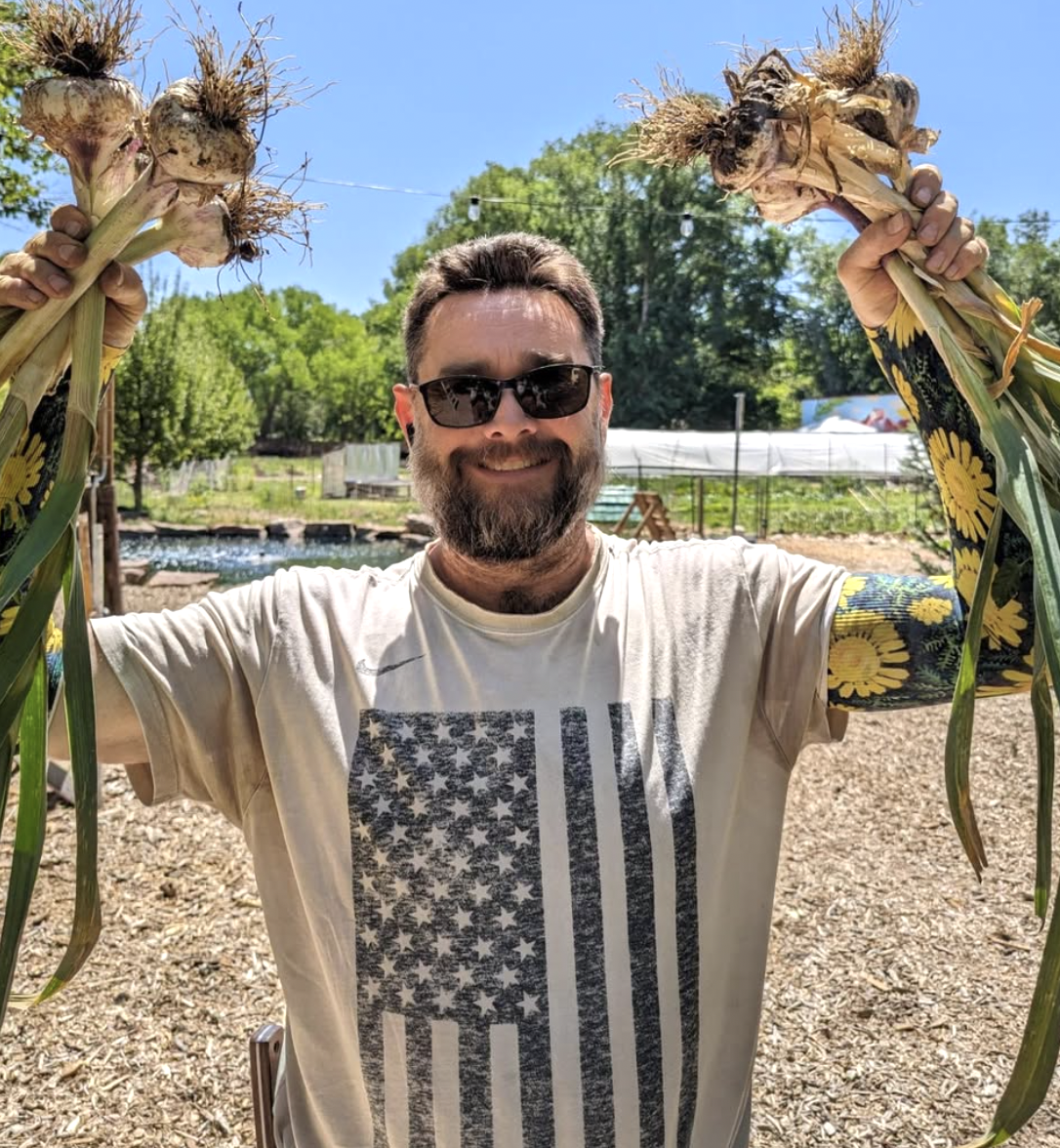
Mark Robertson holding freshly harvested garlic at one of the farming spaces he and his wife Sarah manage in Albuquerque’s North Valley.
Before becoming a farmer, Mark served in the Navy during 9/11. After leaving the military, he used the GI Bill to return to school. At first, he planned to continue in engineering because of the electrical engineering training he had received while serving. Eventually, he switched to biology because he became more interested in environmental systems and how living organisms work together.
While studying biology, Mark realized that many careers connected to the field would keep him indoors working in labs. He wanted something different. He wanted work that kept him outside and allowed him to do something more hands on, which eventually led him to farming.
“After figuring out that farming was… kind of soul-enlivening… you’re going to be happier, a lot happier.” - Mark Robertson
Farming and Community
One thing that stood out during Mark’s interview was the way he talked about farming and how much it changed his life. Even though the work is exhausting and unpredictable at times, he explained that it gave him a sense of purpose that he did not feel in other career paths.
He especially talked about the experience of selling at farmers markets after long work weeks on the farm. There were days when he and Sarah felt drained and did not feel like waking up early to prepare vegetables and interact with customers. However, once they arrived and started talking to people, it reminded them why they continued doing the work.
Independence and Identity
Another part of farming that mattered to Mark was the independence that came with it. During the interview, he explained that he never really wanted to work for somebody else. Farming gave him the opportunity to build something of his own, even though it came with financial risk and uncertainty.
Instead of following someone else’s schedule or goals, he was able to shape his own path and make decisions based on his own values.
Learning Through Experience
Mark and Sarah are first generation farmers, so they had to figure out much of the process on their own. Instead of learning from generations of family farming knowledge, Mark depended heavily on research and trial and error. His background in biology helped him better understand soil systems, microbes, insects, and plant health.
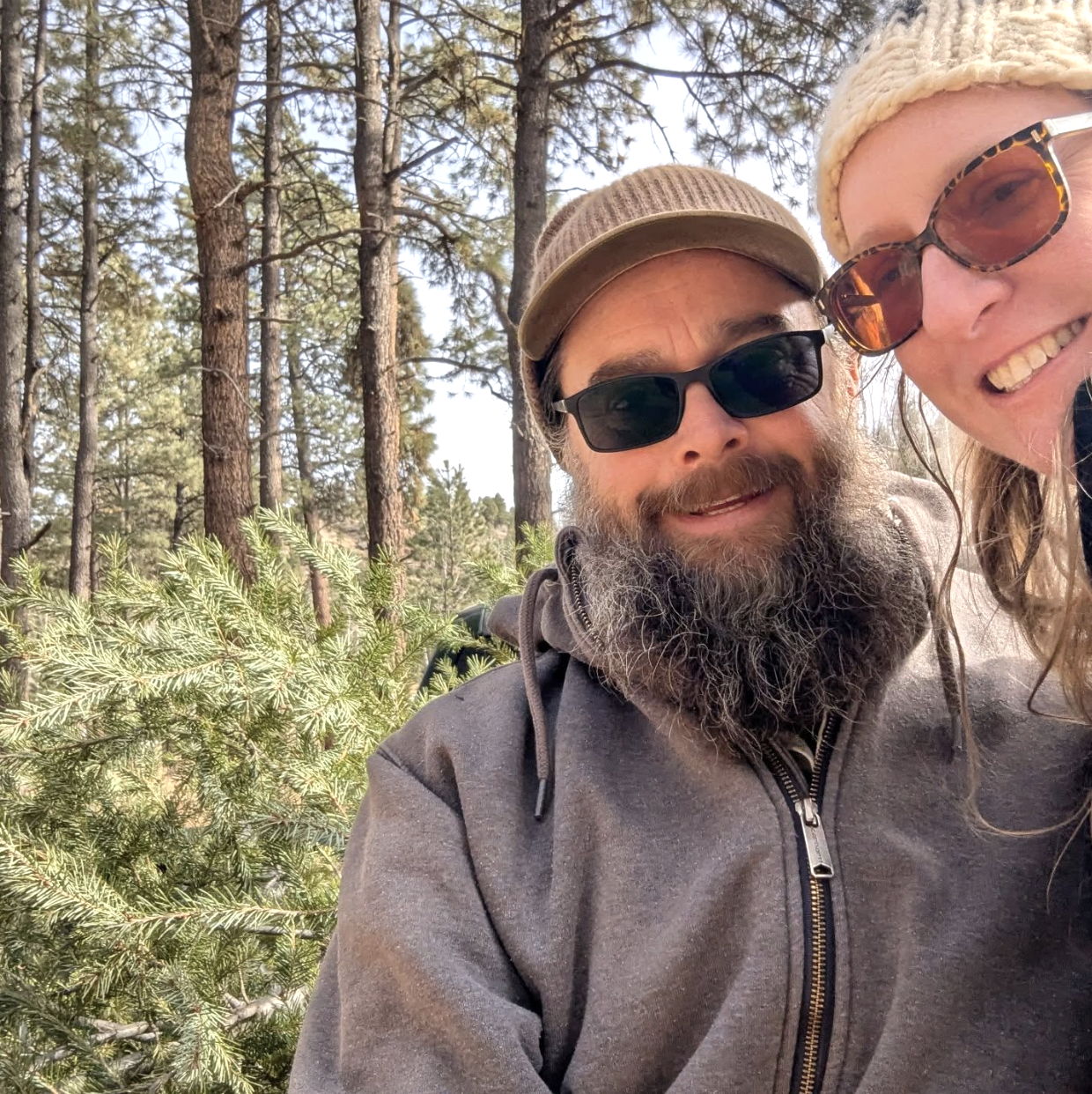
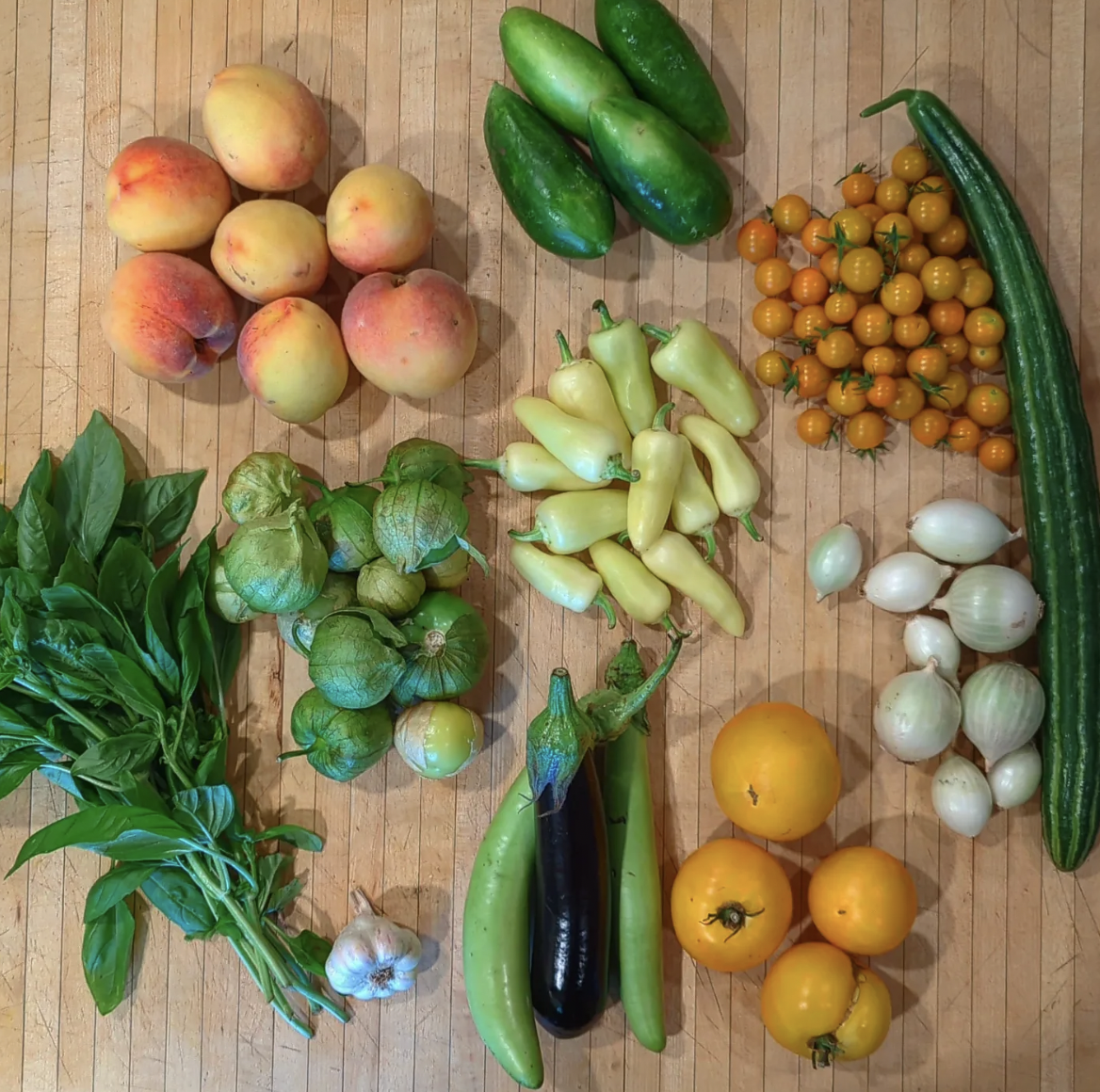
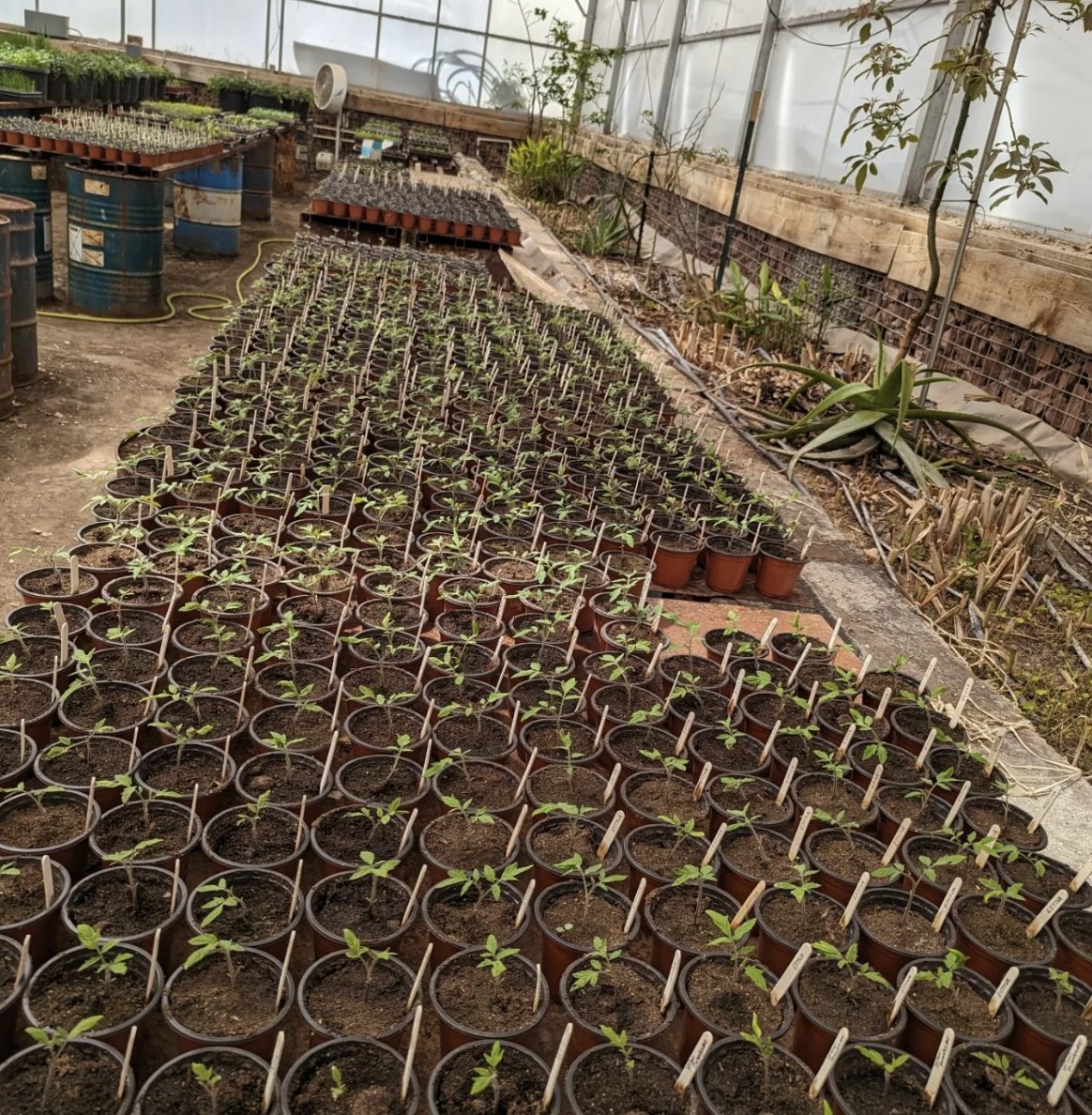
He used that knowledge to develop his own approach to farming over time. He became focused on regenerative and biodiversity based farming methods instead of relying heavily on chemicals or shortcuts.
Biodiversity and Soil Health
Another major focus in Mark’s farming philosophy is biodiversity and soil health. He explained that he tries to work with natural systems instead of controlling everything through chemicals or industrial farming methods. To him, biodiversity means supporting insects, microbes, and healthy soil ecosystems that all work together naturally.
Rather than trying to simplify nature, he believes farming should strengthen it.
“Biodiversity… is basically trying to keep nature intact and bring in more.”
This approach influences the way he manages his farm. Mark believes that healthier ecosystems lead to healthier crops and stronger soil over time. Instead of focusing only on maximizing production in the short term, he thinks about long term sustainability and how the land can continue producing food years into the future.
Soil health was another topic Mark returned to multiple times during the interview. He talked about soil as something living that needs constant care and consideration. Building healthy soil is not something that happens quickly, and Mark emphasizes that there are no shortcuts to this process.
He believes many modern farming methods focus too much on quick results rather than long term health.
“To build soil over time is the only way to do it. There’s no cheats.”
This quote reflects the way Mark approaches farming. He believes that healthy farming takes time, consistency, and attention to the land. Instead of looking for fast solutions, he focuses on practices that slowly improve the soil and create stronger growing systems over time.
Conclusion
Mark Robertson’s story shows the experiences of someone who entered farming from a nontraditional path and built his knowledge through science, experimentation, and experience. His background in the Navy and biology shaped the way he thinks about agriculture, while his focus on biodiversity and soil health reflects his commitment to sustainable farming practices.
Through their work in Albuquerque’s North Valley, Mark and Sarah continue contributing to the local food system while building a farming approach centered on environmental care and community connection.